Options
-
Construction
- stainless steel (Aisi 304)
-
Mounting method
- to screw
-
Logo
- no
- etched in stainless steel
- cut in steel
- sticker


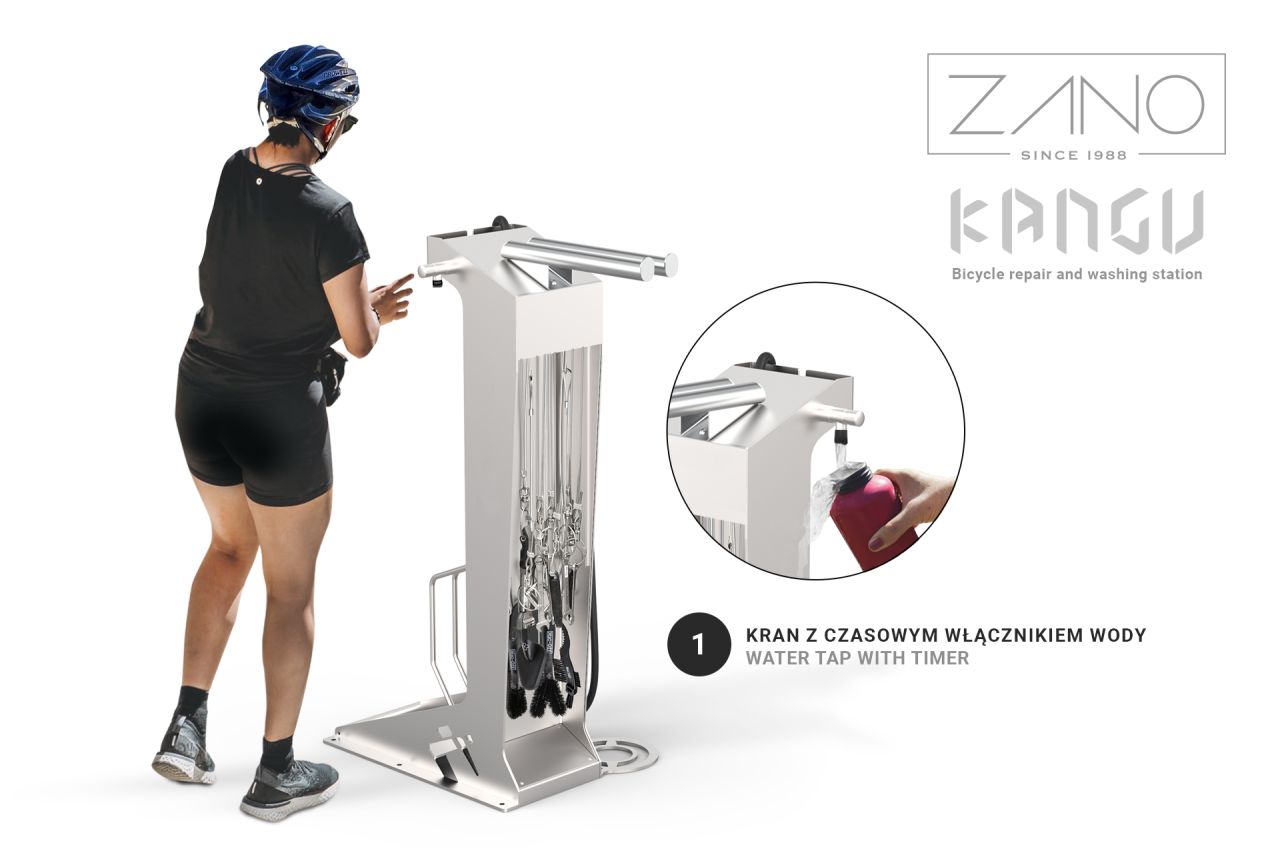
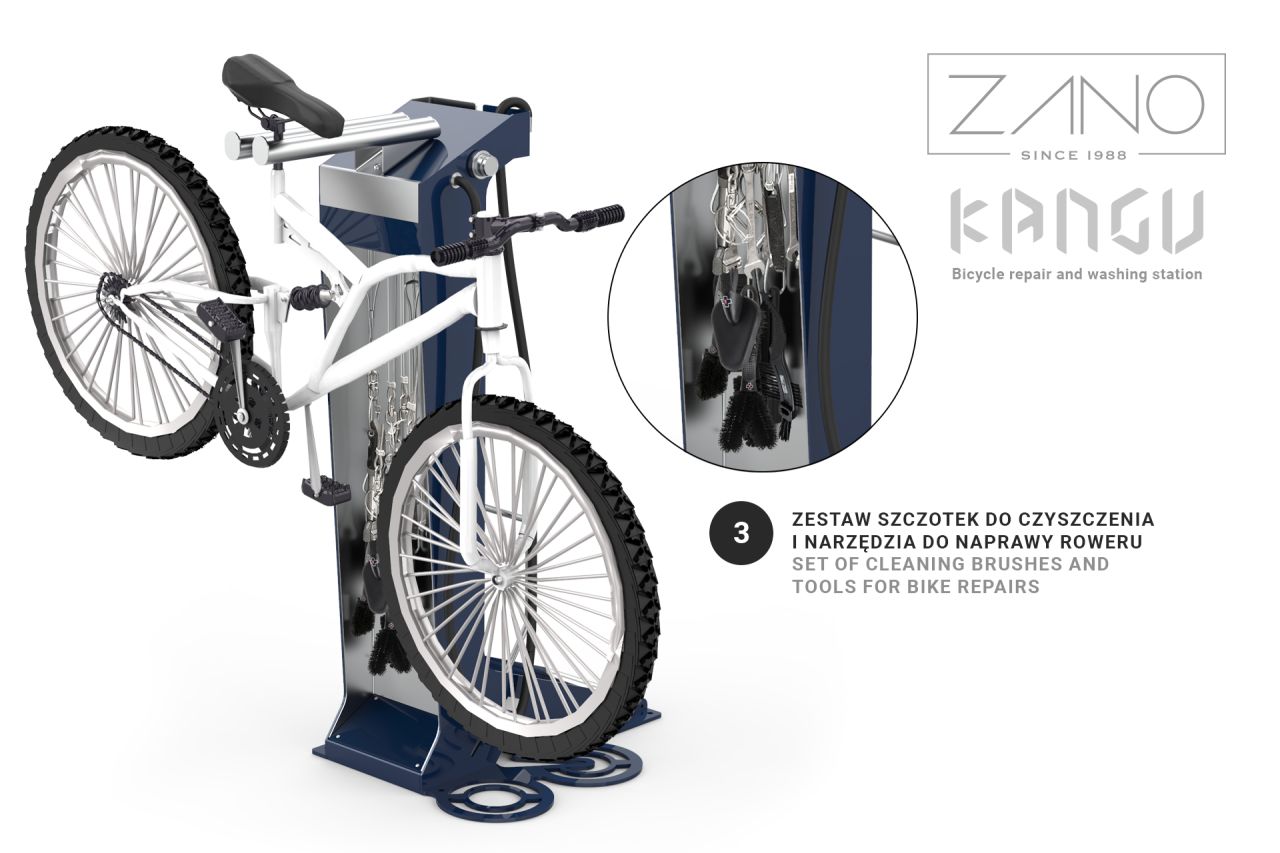
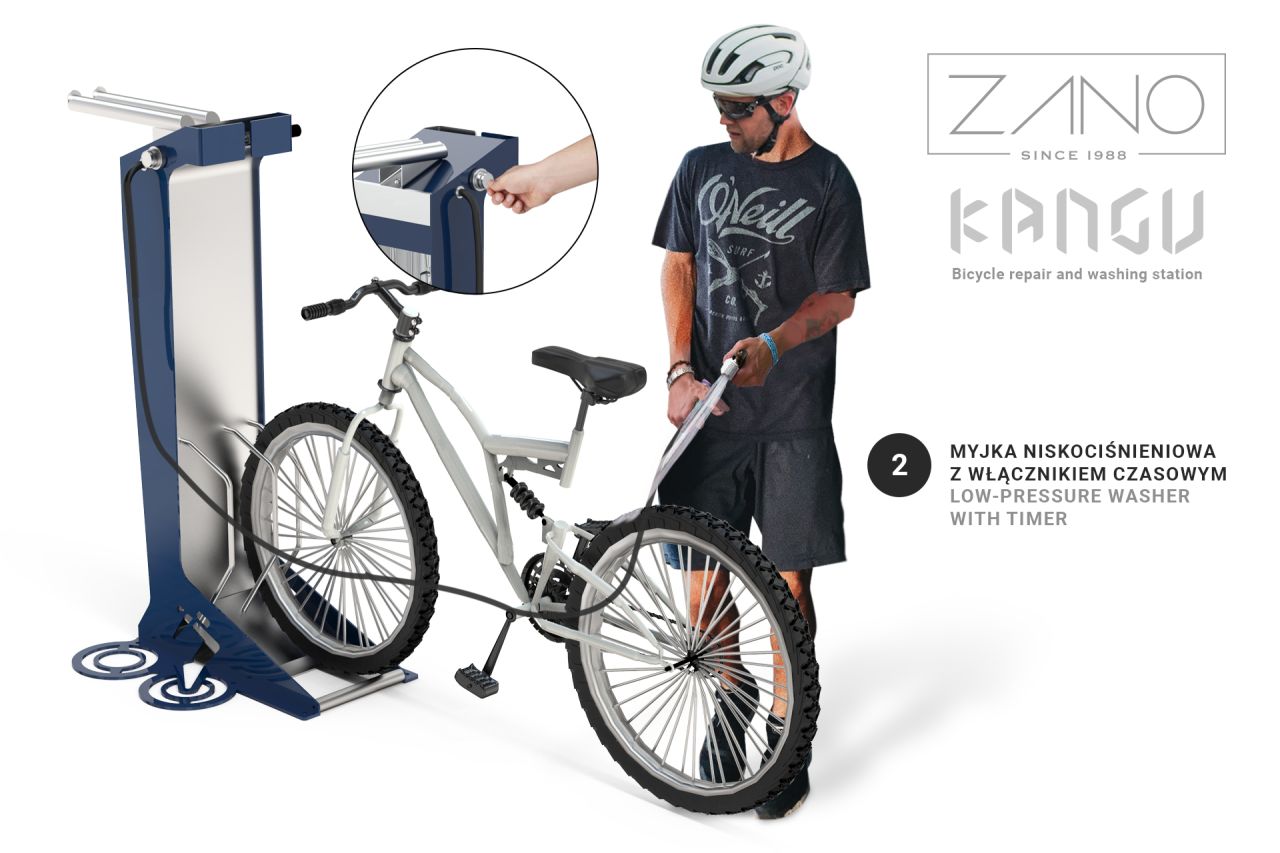
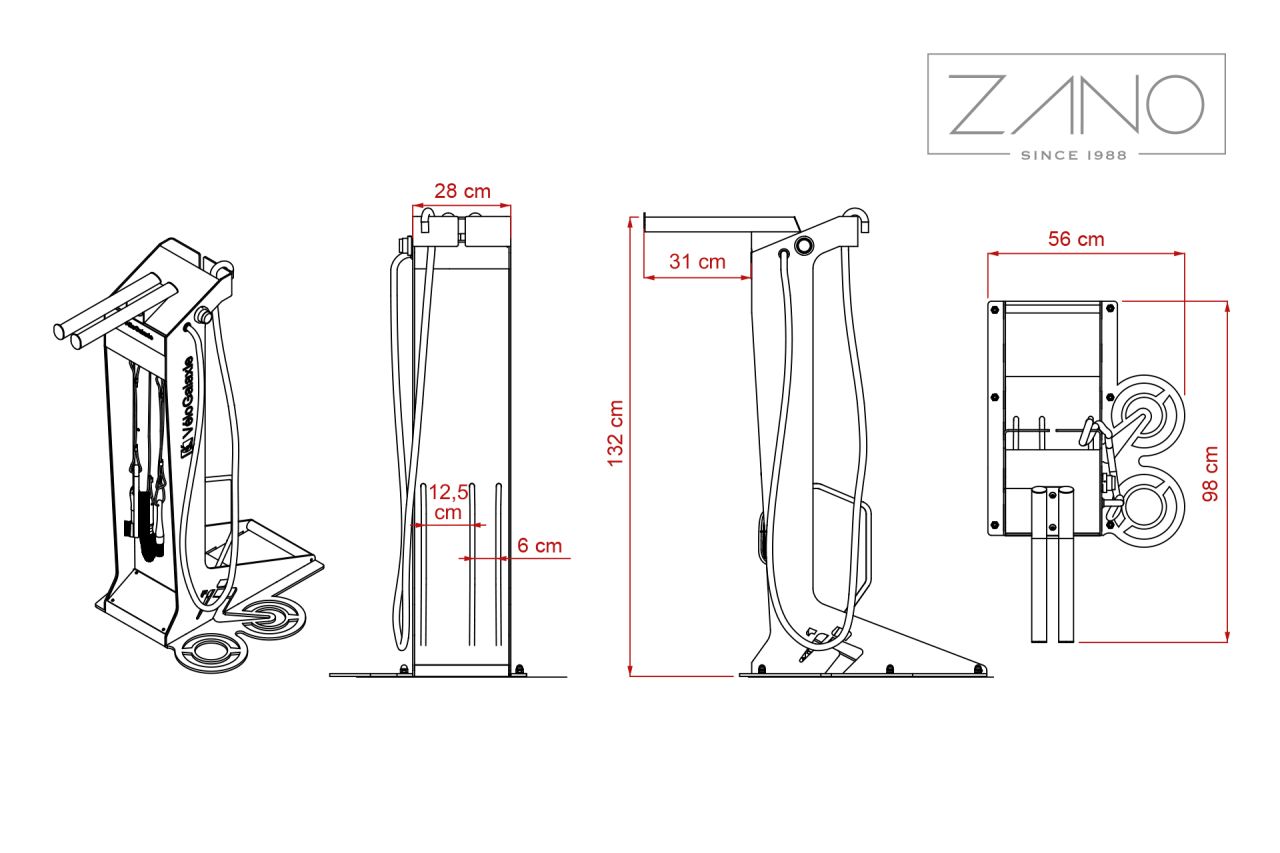
The Kangu bicycle washing and repair station, designated by SKU 18.004.5, represents a sophisticated advancement in urban furniture infrastructure, specifically engineered to meet the growing demands of modern cycling commuters. Designed by Filip Babiarz, this multifunctional unit integrates both maintenance and sanitation capabilities into a single, compact footprint. Measuring 22 inches in width and 52 inches in height, the station is constructed from high-grade 1.4301 stainless steel, ensuring exceptional durability and resistance to harsh environmental conditions. The robust 154 lb framework provides a stable and reliable platform for cyclists performing routine adjustments or cleaning their equipment in public spaces, parks, or transit hubs.
As a critical component of contemporary bicycle repair stations, the Kangu model offers versatile installation and branding configurations tailored to site-specific requirements. The unit is designed for secure mounting via a screw-in method, guaranteeing stability even in high-traffic pedestrian areas. To enhance corporate or municipal visibility, clients may choose from various logo application methods, including etching directly into the stainless steel surface, precision cutting, or the application of customized stickers. This flexibility allows the station to function not only as essential street furniture but also as a cohesive element of an organization’s visual identity, seamlessly blending functionality with professional aesthetics.
Engineered for longevity, the selection of premium stainless steel ensures that this bicycle wash station maintains its structural integrity and visual appeal throughout years of intensive outdoor use. The Kangu line exemplifies the fusion of ergonomics and utility, providing a dedicated space for cyclists to maintain their gear, thereby promoting sustainable transportation and active lifestyles within the city landscape. Whether placed alongside benches or integrated into comprehensive urban furniture layouts, this station serves as an indispensable asset for municipalities and private institutions aiming to provide superior support for the cycling community. Its weather-resistant composition minimizes maintenance overhead, making it a sustainable investment for any public infrastructure project.